Journey to a far corner of India

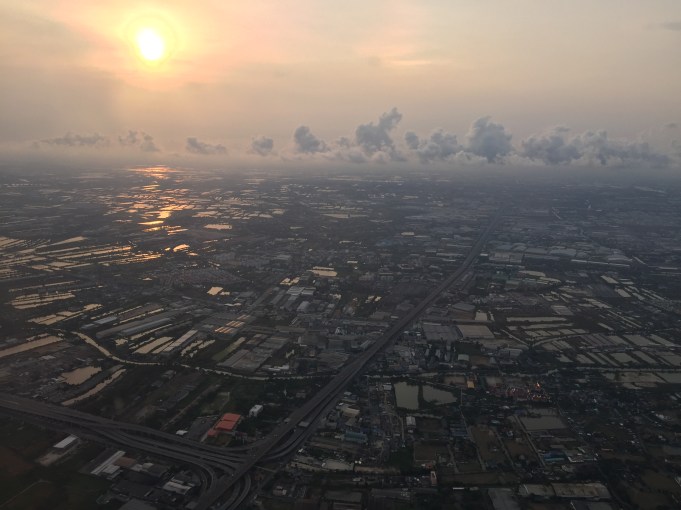
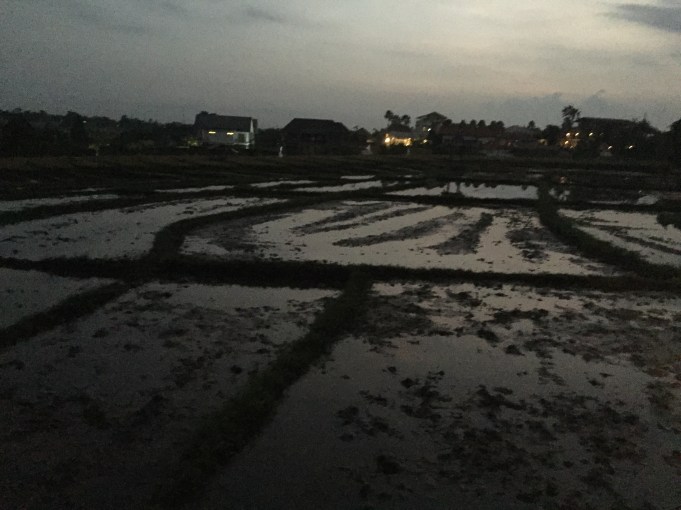
I left Bali in the quiet hours of dawn, a faint light reflected over swamped rice fields, houses behind with lit windows like eyes, trees like dark shadows looming by the roadside. I saw the sun rise as the plane prepared to depart towards Bangkok, where I stopped for a night’s rest.
01 Bali097
Early morning sight, the city rousing from sleep
02 Bali-Gangtok
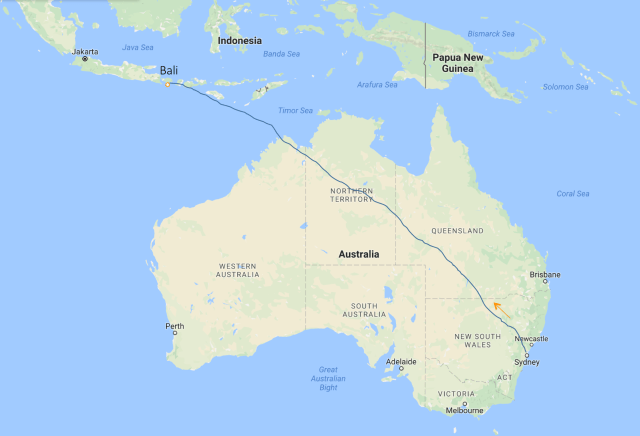
Trip from Bali to Gangtok via Bangkok, Calcutta and Bagdogra

01 Bali113

Next day another early start, another sunrise from the air and then some idle time in Calcutta airport. I was waiting for one more flight to get to Bagdogra when commotion suddenly broke out, as a mob reacted to an airline announcement. I couldn’t understand a word but it was clearly about a cancellation or a flight change. The crowd grew larger as they shifted from one counter to another, shouting and yelling. The attendant struggled to get some order happening while giving explanations and dealing with a thousand questions at the same time. A few minutes passed in confusion until other staff came to help and somehow they took control of the situation and began to untangle the mess. Tons of bags moved through the scale, the multitude dispersed and the noise dwindled leaving the place quiet and calm again.  Incredible! The sheer number of people involved and the speed of this wave that came and went were things I had never witnessed before.

I came out of the airport in Bagdogra thinking I’d find a driver holding a sign with my name on it. Instead a young man came and introduced himself as Neeraj. We walked towards his car and I wondered how he found me so quickly, but soon I realised it wasn’t hard, for I was the only guy that looked really different from everyone else in the crowd. As it turns out this airport connects the rest of the country with this north-eastern region where locals, much more than foreigners, travel during the summer months.

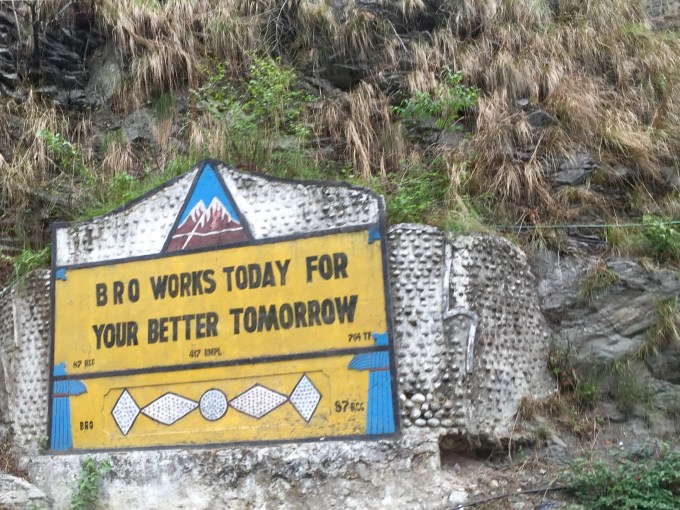
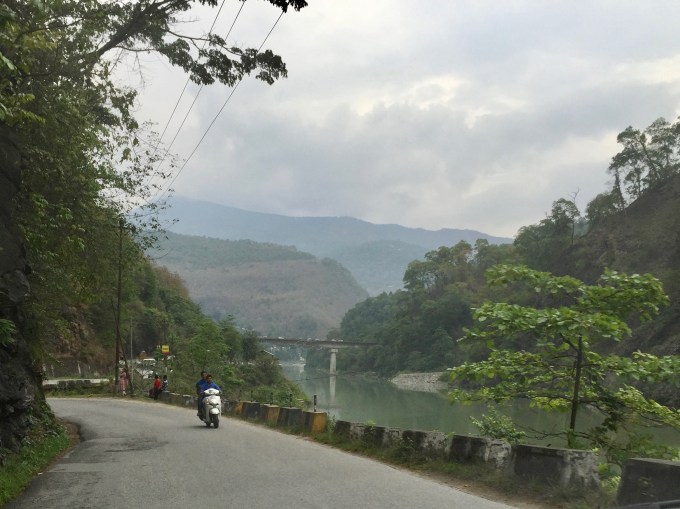
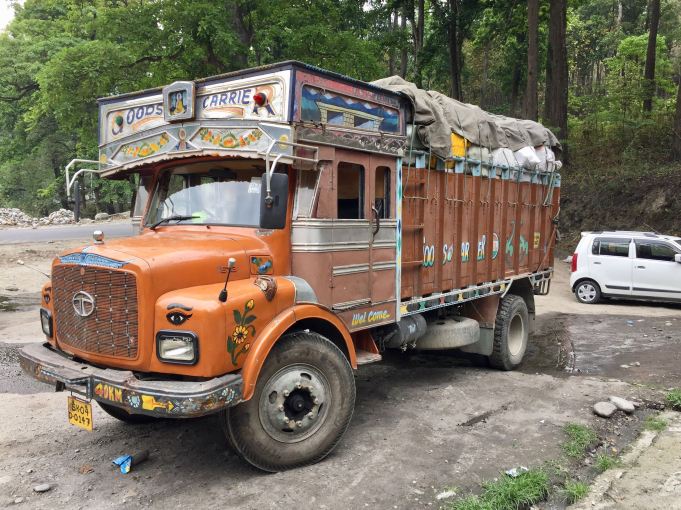
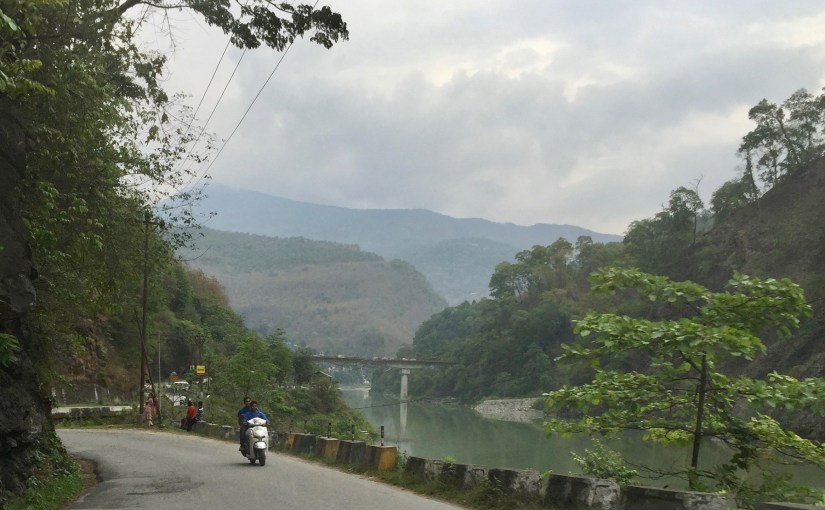
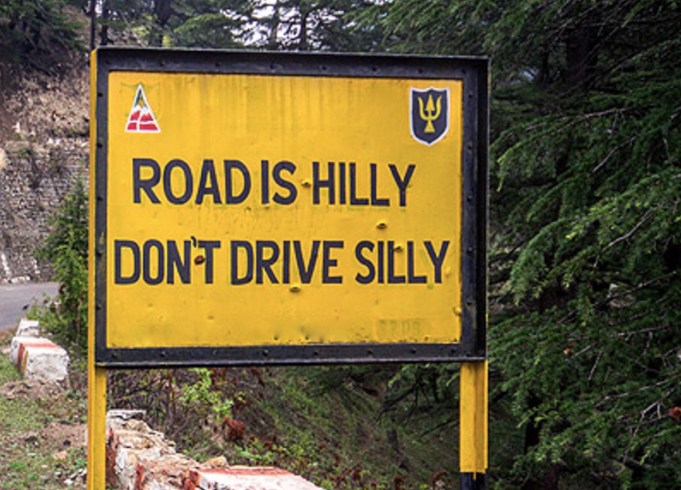
The ride to Gangtok began with slow traffic and a lot of horn tooting. Underfed cows crossed the road, men on foot pulled carts loaded with bags and boxes, motorbikes rushed past to our left and right. Then we started climbing up the mountains where the road lead to the valley of the Teesta river along steep stretches, endless curves and sharp bends. Neeraj spoke little English, but enough that he could tell me a bit about the places we were driving past: shrines, temples, bridges, mountain views, small rural towns with people sitting by the side of the road. Safety signs with funny rhymes appeared every few kilometres: “it’s not a rally, enjoy the valley”,  “it’s a journey, not a runway”, “after whisky driving risky”, and so on. We overtook Trucks adorned with pennants and Buddhist icons, and with a sign in the back that read “blow horn”. Neeraj did just that, no less than five times every minute of the trip.

Kali_Mandir
A Hindu temple near Siliguri, the Sevoke Kali Mandir
Screen Shot 2017-05-12 at 11.15.47 pm
This and other messages on the road: “life is long and the path unknown”

2016-05-08_0546-IMG_7301

2016-05-08_0550-IMG_7303
Bridge over the Teesta river near the West Bengal and Sikkim border
2016-05-11_0151-IMG_7458
Truck decorations seem to be a way to show appreciation for the trade and the vehicle that is at different times the driver’s place of work, their home, their temple.

At the Sikkim border we had to stop to get a Restricted Area Permit for visitors. I found out that entry to this small state is regulated due to its proximity to neighbouring countries like China and Bhutan – and the controversial region of Tibet.  I also learned that Sikkim had become India’s first Organic State, after they’ve implemented organic farming practices over thousands of hectares of agricultural land.

An hour or so later, as the sun gradually hid behind the mountains scattered houses began to appear giving signs that an urban area was close and that we were getting to the end of a very long and tiring journey. We still had to drive through peak hour traffic to finally reach the Nettle and Fern in the last light of day.

Neeraj guided me to the hotel entrance and went back to the car. I had arrived at my destination but he had another five hours ahead of him to drive all the way back – and do the whole journey again the next day… and probably the following.

Far out. It was only my first day in India, and I had already seen so much.
2016-05-08_0817-IMG_7315
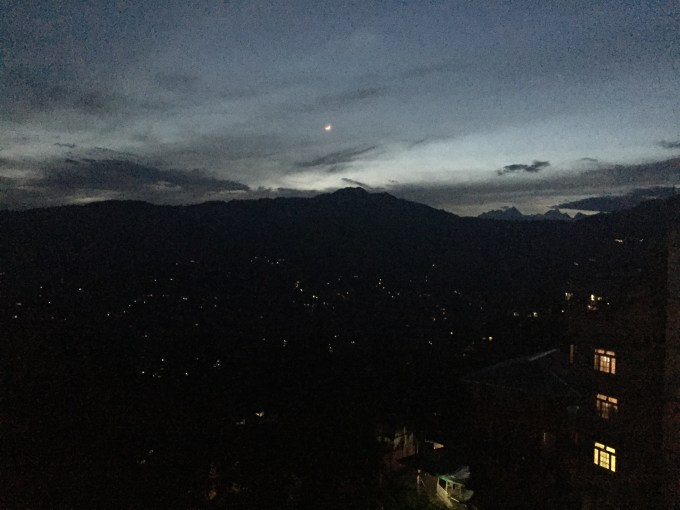
Moon setting behind the Himalayas at nightfall

An expensive load of bull•shit – or should I say, cat•poo?

Towards the end of my stay in Bali Adriana and I went to visit Ubud. About an hour away from the beach and into the forest, this town had a different vibe: still touristy, but more oriented to culture and the arts, with plenty of choice for yoga devotees and spiritual retreats.

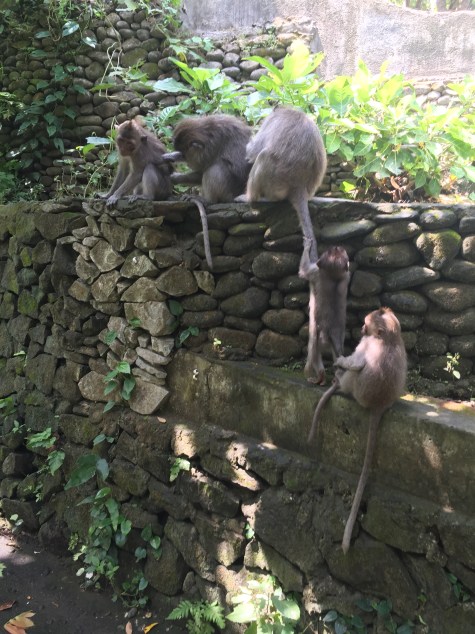
We walked in the Sacred Monkey Forest alongside dozens of crab-eating macaques, wary of their mischievous behaviour – they ran and played amongst themselves in groups and sometimes they stole people’s water bottles, or jumped over someone’s shoulder and opened their backpacks to take what they could and run away with it.

01 Bali039
Monkeys in the Park


01 Bali044
A whole family hanging out


01 Bali068
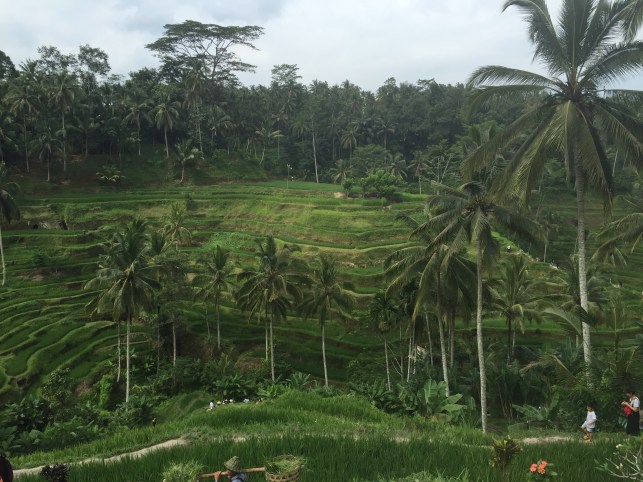
Rice fields in Tegallalang, near Ubud

We drove past terraced rice fields and visited a coffee farm where we learned about the process – and had a taste – of the famous kopi luwak coffee. At the end of the day, after a compulsory massage session (this is a must when you’re in Bali, or so I was told) I went online to find out more about this very expensive product, which I didn’t find particularly special or tastier than a good regular coffee.

01 Bali064

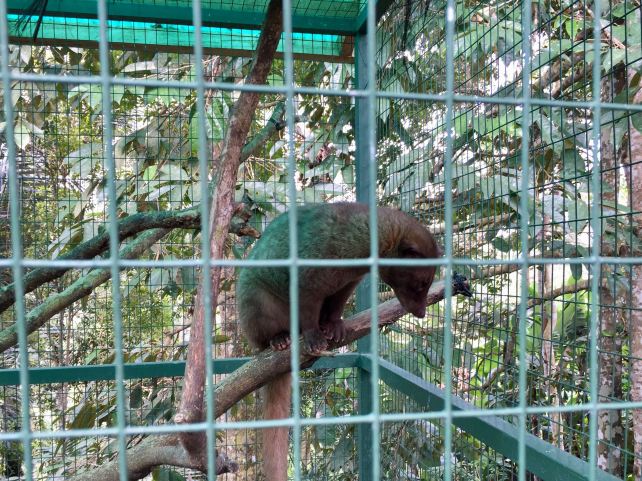
Kopi luwak is easily described as coffee made from wild cat poo. The civet, a catlike animal from Southeast Asia, eats the cherries and partially digests the beans. What comes at the end of the digestive process is a mix of shit and coffee beans that have been enriched by the fermentation that occurred inside the animal’s intestine. This mix goes through further steps to get to the final product – washing, drying, pounding to remove the skin, sorting and roasting. Apart from web pages that promote this ‘amazing’ product, which sells in some sites at AUD$330 per bag of 350g, I found articles that delved into the grim reality of the industry behind it: poor hygiene practices, animal cruelty on so many fronts, lack of control over what is genuine and what isn’t. Then I found this under the “Taste” subtitle of a Wikipedia article on the subject:

Some critics claim more generally that kopi luwak is simply bad
coffee, purchased for novelty rather than taste
”.

That summed it up for me. A great deal of damage being done in the name of novelty and of course, money (1).

01 Bali055
A lonely civet in a cage. Only because he likes to eat fresh coffee beans

I had one more day in Canggu beach to relax in good company and cold beer in the scorching sun. Then a special farewell dinner with my friend as this would be our last catch up – at least for a while. She had an adventure of her own to come over the next few months: more of Bali, then Spain and the Camino de Santiago.

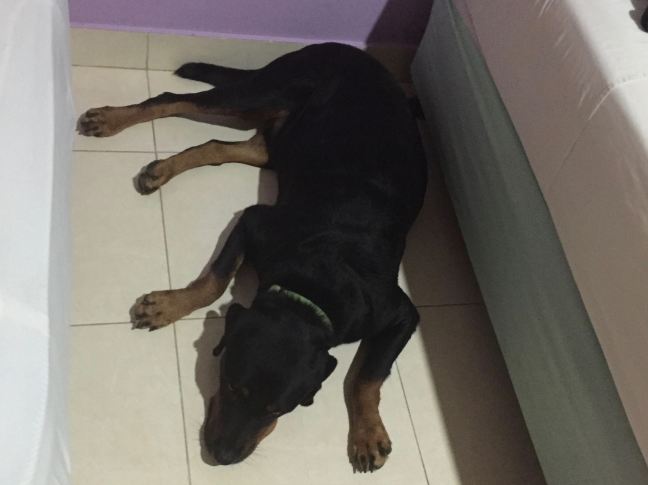
Max managed to sneak into my air-conditioned room to hide away from the heat. I didn’t blame him. But nice as he was, he couldn’t stay: he’d wake me up in the middle of the night to let him out. Not happening, mate.

01 Bali080
Max, my furry friend in Canggu

My day started at 5am the next morning and was filled with long hours of travel in transition to my next destination: a hidden corner in the north east of India.

_______
(1) further reading on kopi luwak in the following websites:
https://en.wikipedia.org/wiki/Kopi_Luwak
http://news.nationalgeographic.com/2016/04/160429-kopi-luwak-captive-civet-coffee-Indonesia/ 

http://world.time.com/2013/10/02/the-worlds-most-expensive-coffee-is-a-cruel-cynical-scam/

Transport alternatives in Bali

Early May 2016

My plan to start the long trip with sun and the beach somewhere in the south of India changed when I learned about the weather. A report about the Kerala region in late April said, “there is currently a heat wave and the city is on fire – 42 degrees ++“. I had a circuit worked out with historical places, train rides, relaxation and beach activities, but not at 42 degrees. It’s just as well no actual bookings had been made.

01 Syd-Bali
First stretch, from Sydney to Bali

I had my last days of work to worry about on top of visas, vaccinations, arrangements for putting my stuff in storage and other travel preparations; so without much further research I booked a flight to Bali. The main reason for choosing this very popular tourist destination was that a good friend was living there for a few months. But I also thought of it as a pleasant spot to wind down and get in the mood for traveling.

People said to steer clear from dodgy areas like Kuta beach, where many party nutcases head off to be loud, cause trouble and get wasted. Not my idea of the best way to unwind. Adriana had put me in contact with lovely Maria for a place in the area of Canggu beach, a bit more northwest of the island. This part was certainly more relaxed, with good places to eat and the beach for sunbathers and surfies.

I quickly learned that the best way to move around Bali is on a motorbike. As a traveler, the alternatives are to either melt as you walk in the sun at thirty-something degrees with little or no shade to be found along the way, or sit for ever in traffic inside a cab or an Uber.

01 Bali014
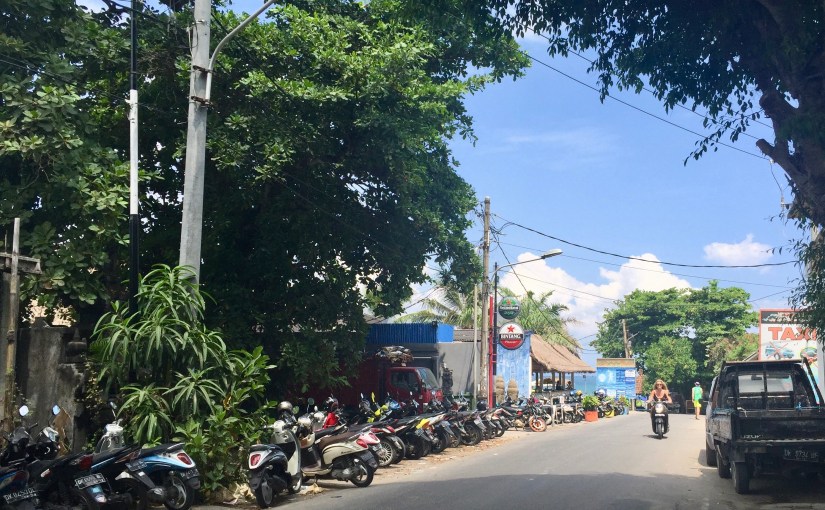
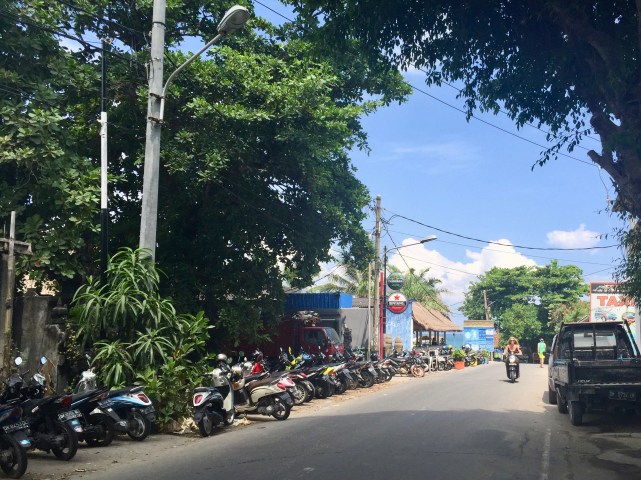
A quiet street near the beach, motorbikes parked everywhere while I made my way – on foot

I didn’t know how to ride a motorbike – I was screwed. People said learning to ride should be easy enough but I wasn’t going to be the adventurous type to go for it in busy and narrow streets next to a thousand other motorbikes and vehicles overtaking and crossing this way and that in a kind of mess which, at the end of the day, worked alright. So I put up with both, sun and traffic in alternating journeys and was relieved each time I rode with my friend on her scooter. This is until I found out about Go-jek.

01 Bali031
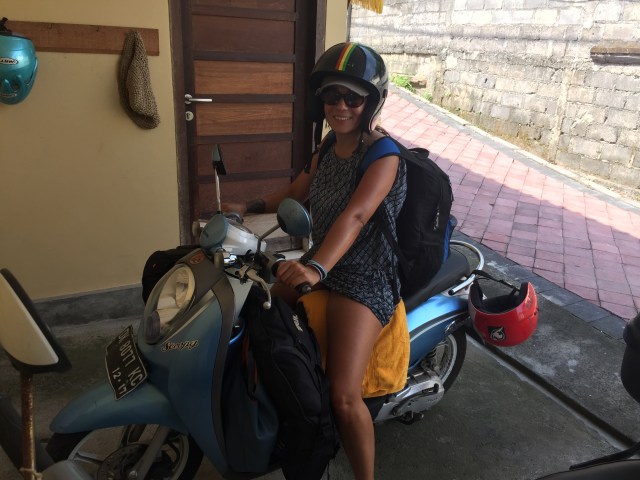
Adriana on her scooter before we went for a ride

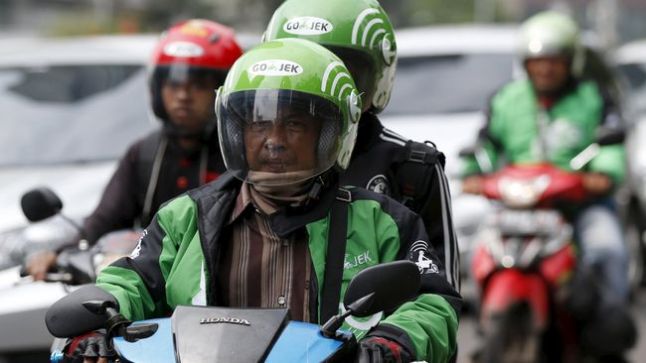
Essentially Go-jek works in the same way as Uber. You book a vehicle through an app on a smartphone which gives the ‘driver’ your location. The difference is that the vehicle you get is, well yes: you get a scooter! If you’re out on the street you’ll spot a rider with a green helmet slowing down and looking around, you’ll wave to let the him (or her) know you’re their customer. He’ll stop, and after a formal greeting ask to confirm your name. Then he’ll pull out a spare helmet for you to wear, hop on the bike, and off you go. Easy and quick ride to your destination. Fantastic!

01 Bali030 - beritamusi.co.id
Go-jek rider at work* – kind, efficient and professional

So I pleasantly filled my days with trips to the beach, to dinner gatherings with Adriana and friends, to yoga classes, the markets, and fun chats with Maria, in the shade, at home.

01-bali016.jpg
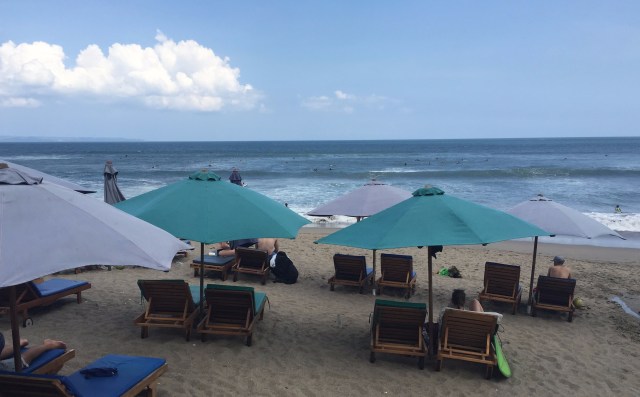
View of Canggu beach, surfers waiting for the swell to pick up
01 Bali025
A local waved his hand as I walked past, checking out his clever way to keep fresh in the shade

_______
Note:
*Go-Jek picture found in the news site http://beritamusi.co.id

About this Blog

I imagine how things were back then: long and slow journeys each day from sunrise to sunset walking beside beasts of burden loaded with food, drinks and other supplies. One step after another with laughter and animated chatter, then quiet hours with only the wind whispering to the wide plains, or some bird squawking in flight high above. One step after another now hampered by the changing landscape, a rocky stretch along the bed of a dry stream; then the wind picking up speed and lifting dust, challenging the will of all on the road to keep on going. And at some point, past the hour of dusk and after a long awaited pause, a light would appear in the distance. “There!”, someone would say and a wave of hope would stir in everyone’s hearts. They made it for one more day.

Caravanserais were located at moderate distances from one other along the ancient trade routes and were open to merchants seeking shelter at the end of a hard day of travel. They offered not only food and a place of rest but also a space for social and cultural exchange.

CaravanseraiBisotunIranArtistAn artist’s recreation of life in a caravanserai*

Around this time last year I was preparing for a trip around the world. The idea of taking an extended break to go traveling gradually took shape into a plan and by the end of April I was ready to see it happen. There were many factors contributing to this idea: TV documentaries on travel, casual conversations about the subject, perhaps a sense that my life had reached a plateau (a sense otherwise known as boredom). But in any case the curiosity for setting off to explore places of the world had been in my head for many years. I was fascinated as a kid by the extraordinary adventures of brave characters in Greek mythology like those of Ulysses and Perseus, or the long journeys of Captain Nemo aboard his Nautilus; and later on, by the travels of Marco Polo in his quest to the far east to meet the Great Kublai Khan. To a large extent, it is his chronicle and the history of the Silk Road that got me going. And now I’m grateful that I had the opportunity to see for myself some of these places, like the caravanserais, and live the experience of being on a long journey away from home, like the merchants of old in their search for silk, spices and other rarities.

And it is here where I’m sharing stories, impressions and pictures of the things I saw.
_______
Note:
* Photo found on http://www.heritageinstitute.com/zoroastrianism/aryans/trade.htm